Geometry first: straight up work on unsettled ground
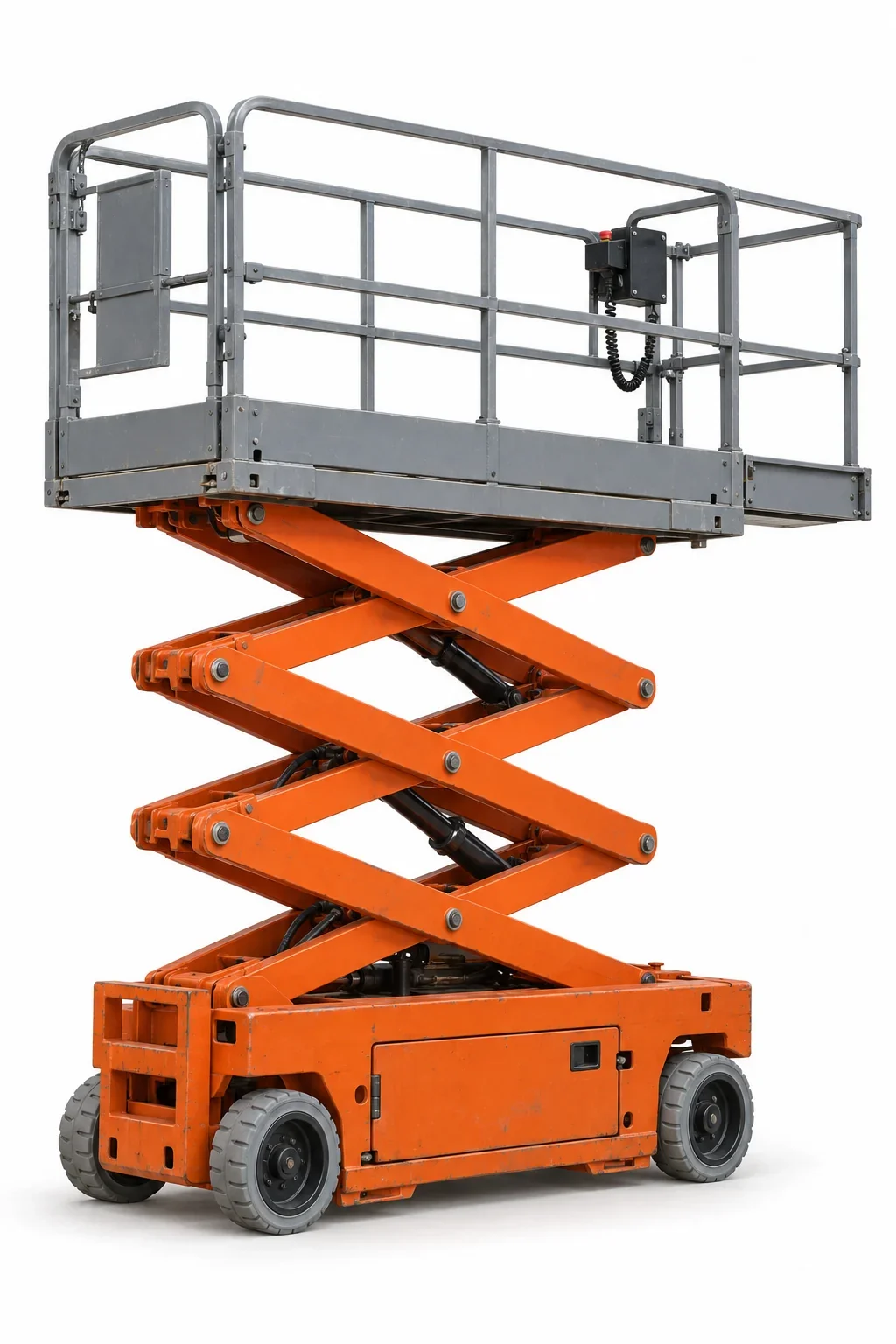
Rough‑terrain scissors excel when the machine can sit below the task and lift straight up, but needs stability on uneven or soft surfaces. If the work is offset behind an obstacle, a boom lift’s outreach is the better fit; see /boom-lift-rental/.
Local conditions that affect selection
- Soils and storms: Well‑drained loams can still turn soft after seasonal rain. Higher ground clearance and 4WD characteristics provide more predictable travel between pours and across utility cuts.
- Heat and hydraulics: Prolonged heat loads common in McAllen affect hydraulic temperatures. Runtime expectations and duty cycles should account for that, especially on long exterior facades.
Sizing the machine to the task
- Platform height vs. façade height: give margin for tools, materials, and comfortable working posture.
- Deck size and capacity: larger platforms support multiple trades and materials but add weight; confirm ground support.
- Power source: diesel or dual‑fuel for yard work and extended outdoor use; check emissions requirements for enclosed or semi‑enclosed areas.
- Access path: verify curb cuts, mud mats, and any slope limits between staging and the work face.
Typical McAllen applications
- Exterior wall systems on commercial shells.
- Site utilities and canopy work along busy distribution yards.
- Mechanical rooftop access from grade where staging is on compacted fill.
If wind exposure, offsets, or obstacles complicate the approach, compare articulating or telescopic booms at /aerial-lift-rental/.