Load, reach, and placement
Three specs drive class selection: - Maximum load weight at ground pick - Required landing height and horizontal setback - Need for fine placement with a carriage or side shift
In regional warehouse and healthcare construction, common tasks include setting mechanical units on mezzanines, feeding masonry crews along façades, and staging pallets near high doors. If the landing zone sits behind a curb, parapet, or slab edge, plan for the rated capacity at that reach, not just at ground.
Surface and stability in local conditions
McAllen sites can swing from firm to soft after storms. Deep loam over uneven fill benefits from 4WD, higher ground clearance, and appropriate tires. Travel routes that cross unpaved yards or landscaped bands require attention to grade changes, swales, and saturated spots near drainage.
Power and heat
High heat and humidity can reduce cooling margins during long, heavy cycles. Expect conservative duty pacing in peak afternoons. Keep in mind that frequent stop‑and‑go in busy dock courts also raises thermal load on drivetrains and hydraulics.
Attachments and workflow planning
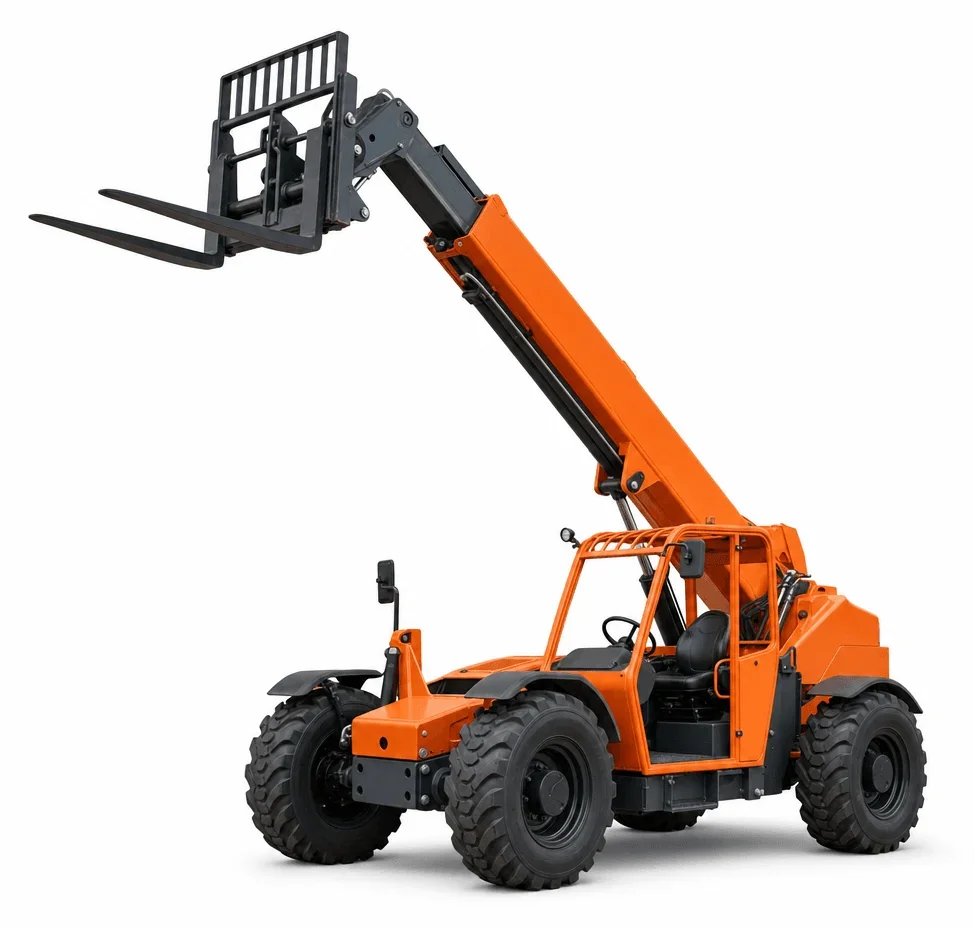
Fork carriages, truss booms, and material buckets change the effective reach and capacity profile. For tight staging around high‑velocity loading areas, shorter wheelbase units turn more easily between dock lanes, while larger units handle longer reaches to upper levels.
Related categories
- For elevated personnel access during install or inspection, see /telescopic-boom-lift-rental/ and /articulating-boom-lift-rental/
- For pallet moves on finished floors, compare /forklift-rental/
Actual conditions, the selected unit’s instructions, and site procedures govern final suitability.